

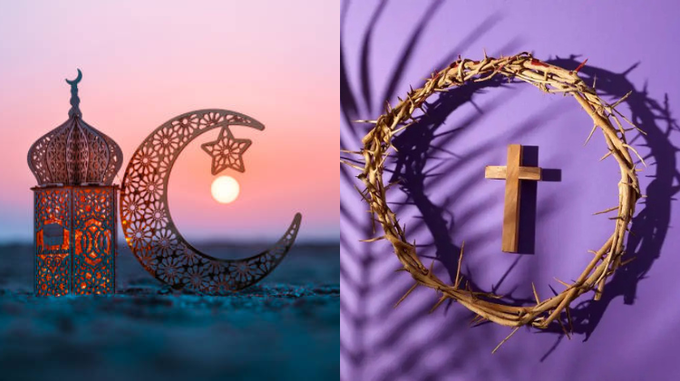
A rare moment in the religious calendar is unfolding this year as the Christian season of Lent and the Islamic holy month of Ramadhan begin at nearly the same time an occurrence that happens roughly once every three decades.
The overlap is due to the Islamic lunar calendar moving through the Gregorian calendar over a 33-year cycle. Because Ramadhan shifts by about 10 to 11 days earlier each year, it occasionally coincides with major dates in the Christian liturgical calendar, including the start of Lent.
In 2026, Ash Wednesday which marks the beginning of Lent for many Christian denominations falls in the same period as the commencement of Ramadhan, creating a unique convergence of two global faith traditions centred on prayer, fasting, and spiritual renewal.
Lent: A Season of Reflection and Renewal
Lent is a six-week period observed by many Christians in preparation for Easter. Rooted in early Christian tradition dating back to at least the fourth century, the season spans 40 days (excluding Sundays) and commemorates the 40 days Jesus is believed to have fasted in the wilderness.
The period begins on Ash Wednesday, when worshippers particularly within the Roman Catholic and Orthodox traditions receive ashes on their foreheads as a sign of repentance and humility. The ashes, traditionally made from burnt palm branches from the previous year’s Palm Sunday, symbolize human mortality and the need for spiritual conversion.
Throughout Lent, Christians emphasize prayer, fasting, and almsgiving. Many abstain from certain foods or habits, devote more time to scripture and worship, and engage in acts of charity as a way of deepening their relationship with God and cultivating discipline.
Key moments in the Lenten journey include Palm Sunday, which recalls Jesus’ entry into Jerusalem; Maundy Thursday, marking the Last Supper; Good Friday, commemorating the crucifixion; and Easter Sunday, celebrating the resurrection, the central event of Christian faith.
Ramadhan: A Month of Devotion and Self-Discipline
For Muslims, Ramadhan is the holiest month of the Islamic calendar. It commemorates the revelation of the Qur’an to Prophet Muhammad and is observed through daily fasting from dawn to sunset for 29 or 30 days.
Fasting, known as saum, is one of the Five Pillars of Islam and is obligatory for adult Muslims, with exemptions for those who are ill, elderly, pregnant, nursing, or travelling. The fast is broken at sunset with iftar, traditionally beginning with dates and water, followed by a meal shared with family or community members. Before dawn, Muslims partake in a pre-fast meal known as suhur.
Beyond abstaining from food and drink, Ramadhan is marked by intensified prayer, Qur’anic recitation, charity, and community engagement. Mosques host nightly Taraweeh prayers, and many communities organize food drives and outreach programs to support the less fortunate.
The last ten days of Ramadhan are considered especially sacred, with particular reverence given to Laylat al-Qadr (the Night of Power), believed to be the night when the first verses of the Qur’an were revealed.
The month concludes with Eid ul-Fitr, a celebratory festival marked by communal prayers, feasting, charity, and the exchange of gifts.
Shared Themes Across Faiths
Though rooted in different theological traditions, Lent and Ramadhan share striking similarities. Both seasons emphasize fasting, repentance, prayer, charity, and self-examination. Each calls believers to step back from routine comforts, cultivate self-control, and deepen spiritual awareness.
Both traditions also highlight compassion for the vulnerable. Acts of giving whether through Christian almsgiving or Islamic zakat and voluntary charity form a central pillar of observance.
The near-simultaneous beginning of these sacred periods offers a rare opportunity for reflection across faith communities. At a time when social divisions often dominate public discourse, the parallel observance underscores shared values of humility, service, gratitude, and moral accountability.
For millions of Christians and Muslims worldwide, the coming weeks will be defined by spiritual discipline and renewed devotion. While the rituals differ, the core intention remains remarkably aligned: drawing closer to God, strengthening character, and fostering compassion within families and communities.
As Lent and Ramadhan unfold side by side this year, the moment serves as a reminder that across traditions, faith continues to call humanity toward reflection, renewal, and responsibility.


