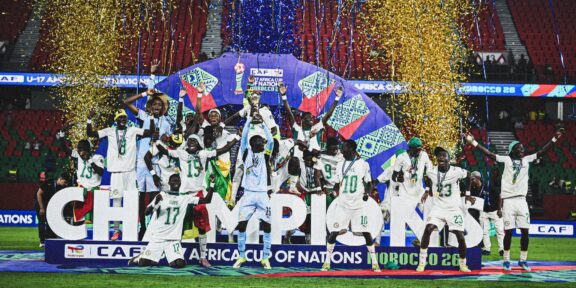
The fallout from the dramatic overturning of the 2025 continental final has taken another decisive turn, with Senegal officially rejecting CAF’s ruling and confirming plans to escalate the matter to the highest legal stage in global sport.
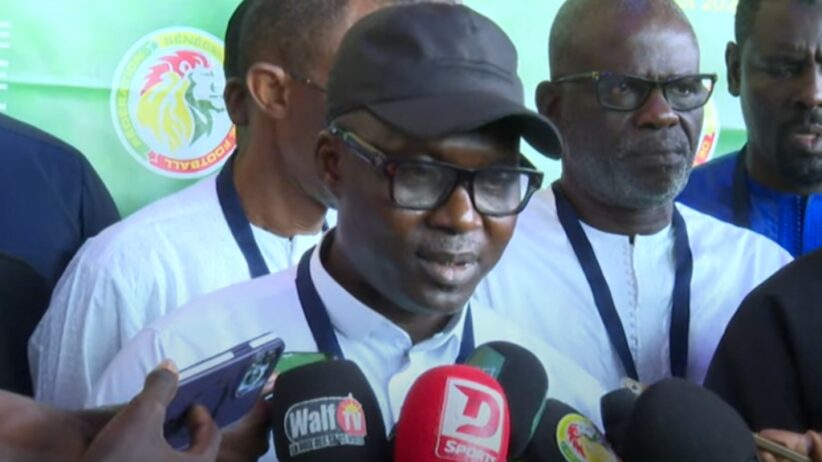
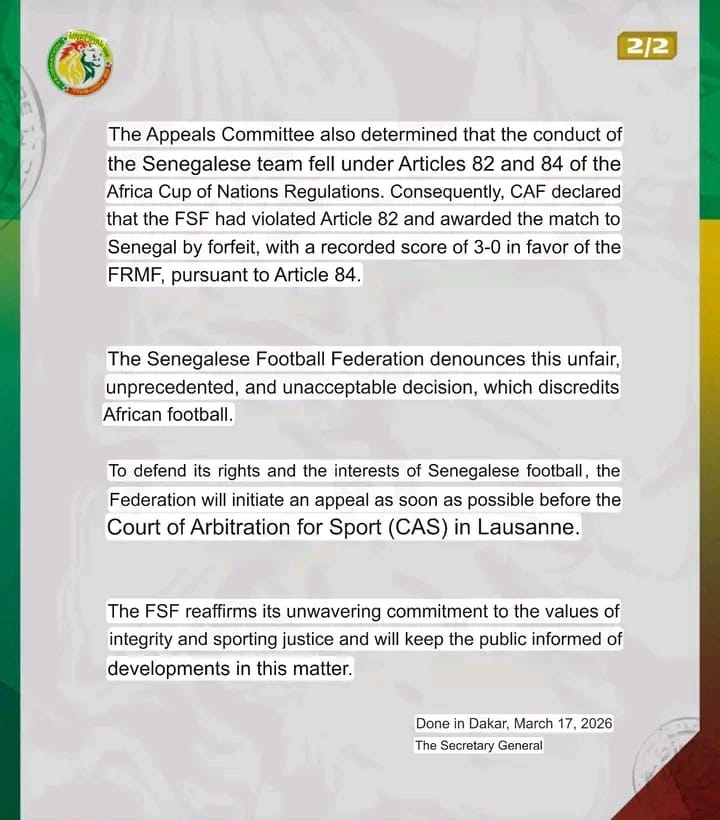
In a strongly worded communiqué issued from Dakar, the Fédération Sénégalaise de Football responded to the March 17 decision by CAF’s Appeal Board, which stripped Senegal of their on-field victory and awarded Morocco a 3–0 result on the basis of forfeiture. While acknowledging receipt of the ruling, the federation made it clear it does not accept the outcome, describing the decision as unjust, unprecedented, and damaging to the image of African football.
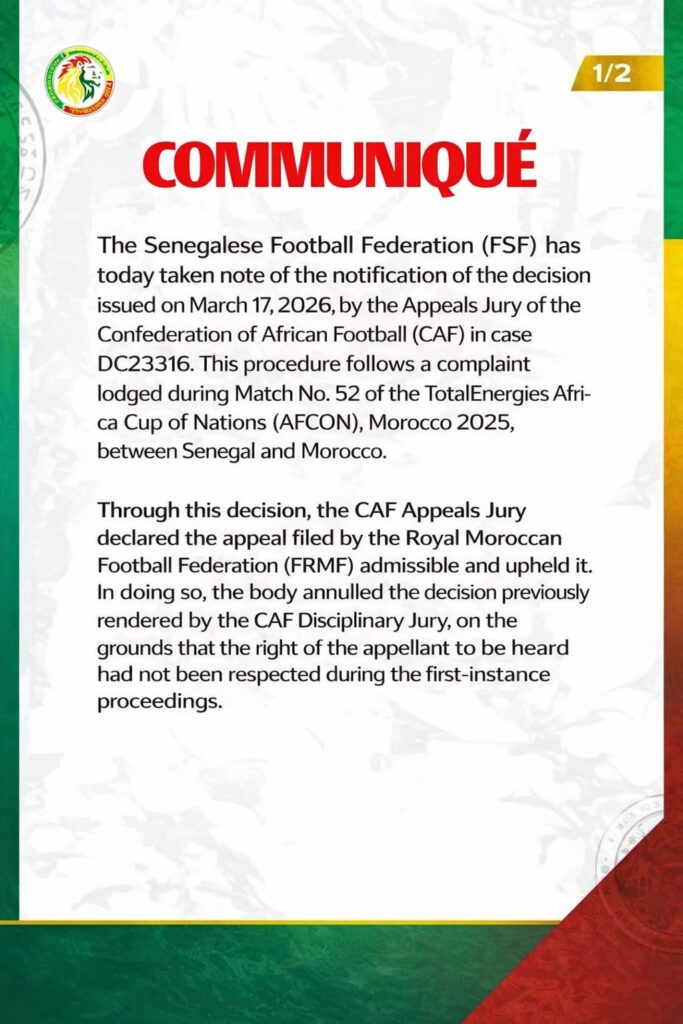
At the core of CAF’s ruling was the conclusion that Senegal’s conduct during the final , particularly the temporary walk-off following a late penalty decision , fell within the scope of Articles 82 and 84 of the competition regulations. The Appeal Board not only upheld Morocco’s protest but also annulled the earlier decision by the Disciplinary Jury, citing a failure to fully respect Morocco’s right to be heard in the initial proceedings.
That procedural finding proved decisive. It reopened the case, allowing the Appeal Board to reassess both the facts and their legal interpretation, ultimately leading to the forfeiture ruling that reversed the result months after the final whistle.
However, Senegal’s federation has pushed back firmly against both the process and the conclusion. In its statement, the FSF argues that the decision undermines the credibility of the competition and sets a troubling precedent for the governance of the game on the continent. The tone of the response reflects a federation unwilling to let the matter rest at continental level.
The next step now shifts the dispute beyond Africa.
Senegal has confirmed it will file an appeal before the Court of Arbitration for Sport in Lausanne, a move that takes the case into an international legal arena where CAF’s interpretation of its own regulations will be tested against broader principles of sporting justice. CAS, widely regarded as the final authority in global sports disputes, will now be asked to determine whether the forfeiture ruling was justified, both procedurally and substantively.
This escalation ensures that the saga surrounding the final is far from over. What began as a chaotic sequence of events on the pitch has evolved into a multi-layered legal battle involving disciplinary bodies, appeals processes, and now international arbitration.
For Senegal, the objective is clear: to overturn the forfeiture decision and restore the result achieved on the field. For Moroccan football authorities, the CAF ruling stands as validation of their long-held position that the integrity of the match was compromised.
Beyond the two nations, the implications continue to ripple across African football. The case now raises broader questions about how match disruptions are judged, how appeals are handled, and how far governing bodies can go in revising results after the fact.
As the matter heads to Lausanne, one reality remains unchanged: the final that once seemed decided on the pitch is still being contested, and its true conclusion may ultimately be written not by players, but by judges.