Kenyan football has been plunged into fresh uncertainty after the Football Kenya Federation (FKF) postponed the opening fixtures of the 2026/27 season, just days after the High Court in Murang’a gave the federation the green light to commence the campaign under the 2019 FKF Rules and Regulations.
The latest postponement has intensified concerns among clubs and football stakeholders, with the new season now caught between court directives, conflicting regulations and questions over the federation’s administrative preparedness.
FKF had initially scheduled the opening round for August 29–30 before releasing revised fixtures moving matches to between August 31 and September 2. Those fixtures have now been halted at the final hour, leaving clubs and players uncertain over when competitive football will finally resume.
At the heart of the crisis is a dispute over two competing sets of regulations. Under the 2019 FKF Rules, the bottom two Premier League teams are automatically relegated, while the team finishing 16th is required to play a promotion/relegation playoff against the third-placed NSL side.
The 2025 Rules, which FKF applied during the previous season, changed that framework by introducing three automatic relegations and three automatic promotions while removing the playoff.
The regulatory shift triggered legal challenges, most notably from Kariobangi Sharks after the club finished 16th and faced automatic relegation under the 2025 framework. The club secured stay orders through proceedings at the Sports Disputes Tribunal and the courts, further complicating FKF’s attempts to establish the final composition of the top flight.
The Murang’a High Court subsequently allowed FKF to commence the 2026/27 season but directed the federation to do so under the 2019 rules. That has created another layer of uncertainty, particularly for recently promoted Mombasa United, whose position in the Premier League could be affected if the playoff provision is restored.
The consequences of the regulatory uncertainty extend beyond promotion and relegation.
Several Premier League clubs recruited foreign players under the 2025 framework, with some reportedly signing as many as seven. The 2019 regulations provide for a lower foreign-player limit, potentially leaving clubs with players under contract whom they may not be able to register.
For clubs that have already spent millions assembling squads and preparing for the new campaign, the uncertainty could translate into significant financial and contractual complications.
It is against this backdrop that Gor Mahia Vice Chairman Sally Bolo called for greater clarity from FKF leadership.
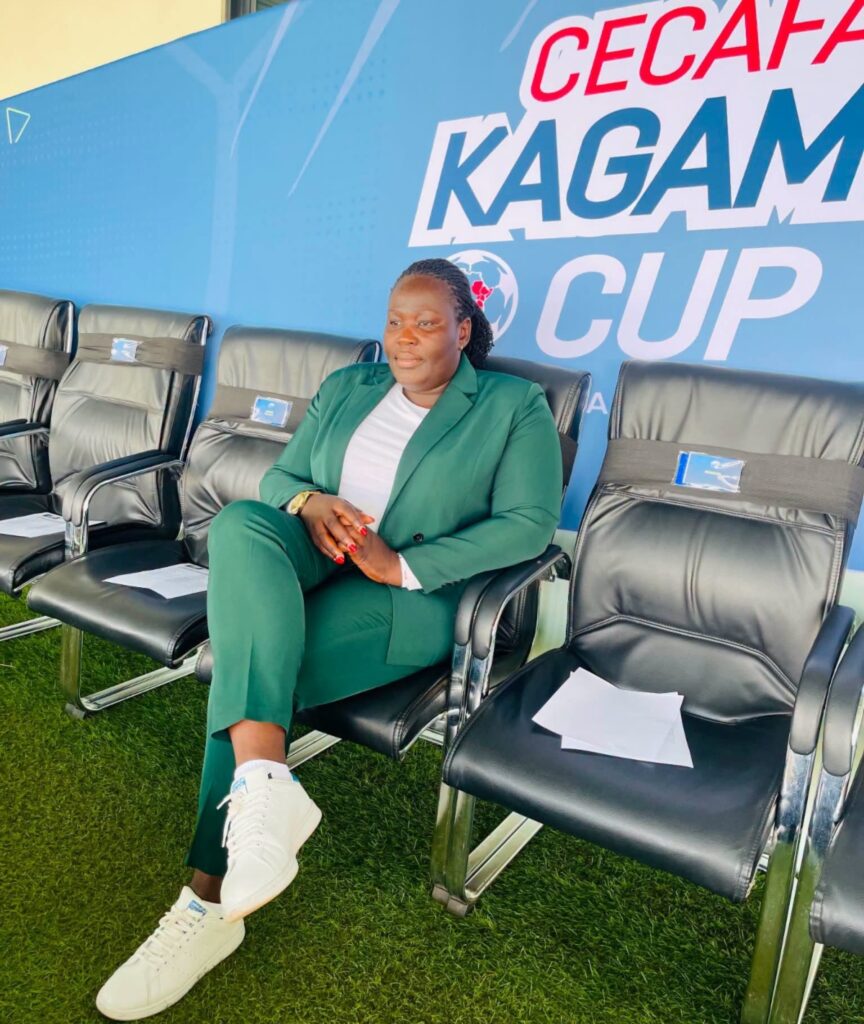
Bolo urged FKF President Hussein Mohammed to urgently convene the National Executive Committee (NEC) and formally confirm the official start and end dates of the 2026/27 SportPesa Premier League.
She argued that clubs invest heavily in preparing for a season and cannot be expected to enter a competition whose commencement has not been formally established by the federation’s governing structures.
Bolo also raised wider governance concerns, pointing to the absence of a General Secretary/CEO and the lack of Appeals and Disciplinary Committees.
Her message was clear: the league should not simply begin because fixtures have been released. The administrative and legal framework must first be put in order.
“Clubs deserve certainty. Players deserve proper competition. Kenyan football deserves governance,” Bolo stated, insisting that a professional league cannot be built on procedural uncertainty.
The concerns were reinforced by FKF Vice President McDonald Mariga, who issued a statement Monday morning calling for constitutional order in Kenyan football.
Mariga expressed concern over the continued uncertainty surrounding the resumption of the domestic leagues and argued that football should be a unifying force rather than remain trapped in prolonged disputes over governance, regulations and institutional authority.
He pointed to Kenya’s preparations to co-host the 2027 Africa Cup of Nations, stressing the need for a stable domestic football structure as the country approaches the continental tournament.
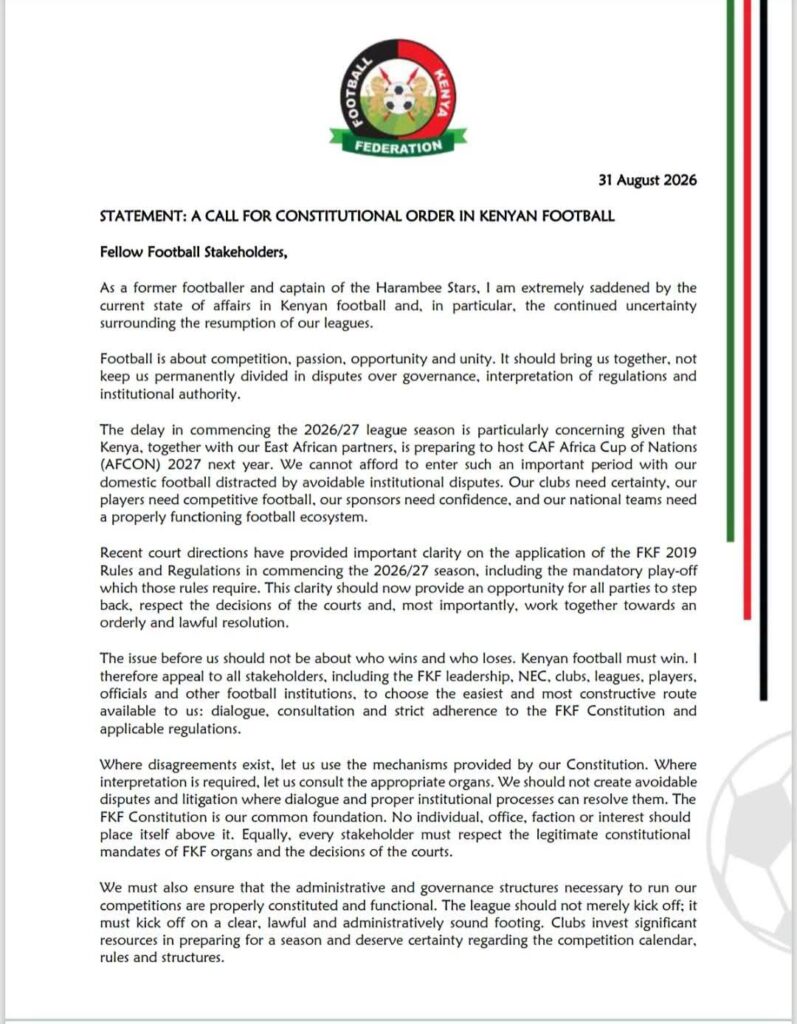
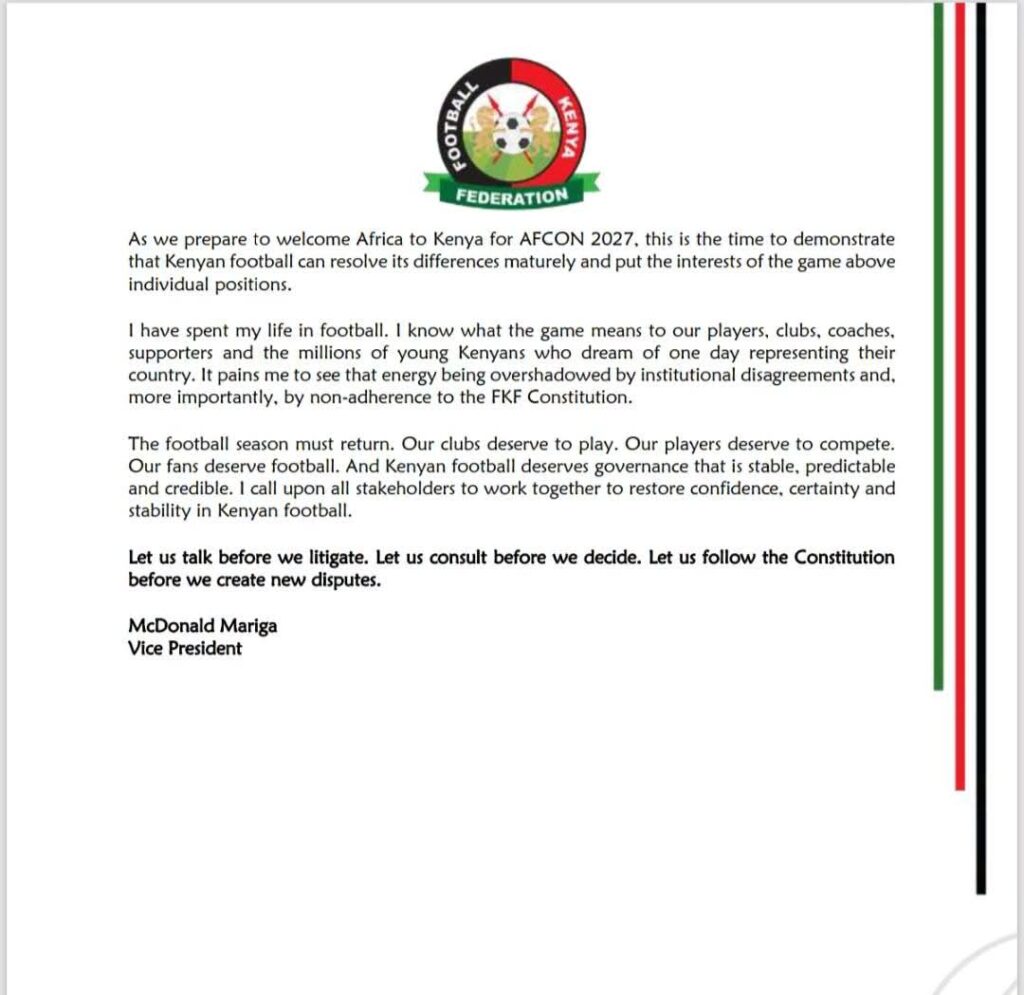
According to Mariga, clubs need certainty, players need competitive football, sponsors require confidence and the national teams need a properly functioning domestic football ecosystem.
He also called for respect for court decisions and urged stakeholders to use the mechanisms provided under the FKF Constitution to resolve disagreements.