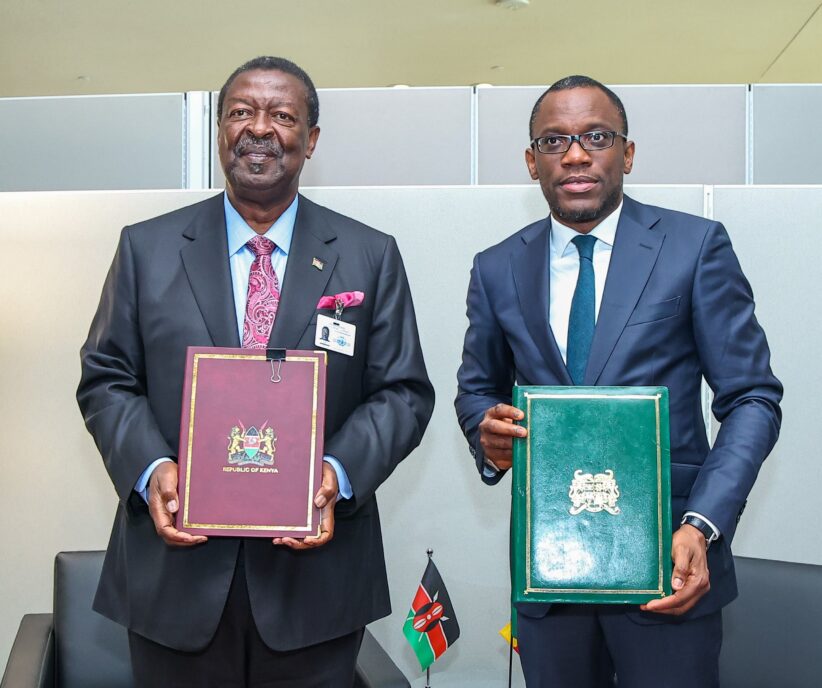
Kenyans and Beninese nationals will be able to travel between the two countries without visas starting next month, following the signing of a new bilateral agreement.
The deal was concluded on the sidelines of the United Nations General Assembly (UNGA) in New York between Prime Cabinet Secretary and Foreign Affairs CS Musalia Mudavadi and Benin’s Foreign Minister Olushegun Adjadi Bakari.
Under the agreement, citizens of both nations can stay in each other’s country for up to 180 days visa-free. However, the waiver applies strictly to visits and does not grant work privileges. After six months, travelers will need to apply for visas in line with the host country’s immigration rules.
Diplomatic, official, service, and ordinary passport holders appointed to diplomatic or consular missions, along with their families, will still be required to obtain visas before entering the other country.
Bakari welcomed the move as a milestone for African integration:
“The waiver means that we are integrating the citizens of Africa and helping our youth take advantage of opportunities in Africa. It is a strong message,” he said, commending President William Ruto and Prime CS Mudavadi for the initiative.
Following the signing, Mudavadi also held bilateral talks with Yvan Gil Pinto, Venezuela’s Minister of People’s Power for Foreign Affairs, who reaffirmed Caracas’ commitment to strengthening ties with Africa.
“Fifty-seven percent of our population is African. The late President Hugo Chávez always told us to be strategic with Africa because it is the future. We want to make progress and sign the pending agreements between the two countries,” Pinto said, noting pending pacts in tourism, agriculture, and education.
Mudavadi pledged to fast-track the agreements, saying they could be signed during upcoming meetings in Brazil and Nairobi.
“We can use this opportunity to sign one or two Memorandums of Understanding,” Mudavadi said, stressing Kenya’s commitment to multilateralism and international cooperation.