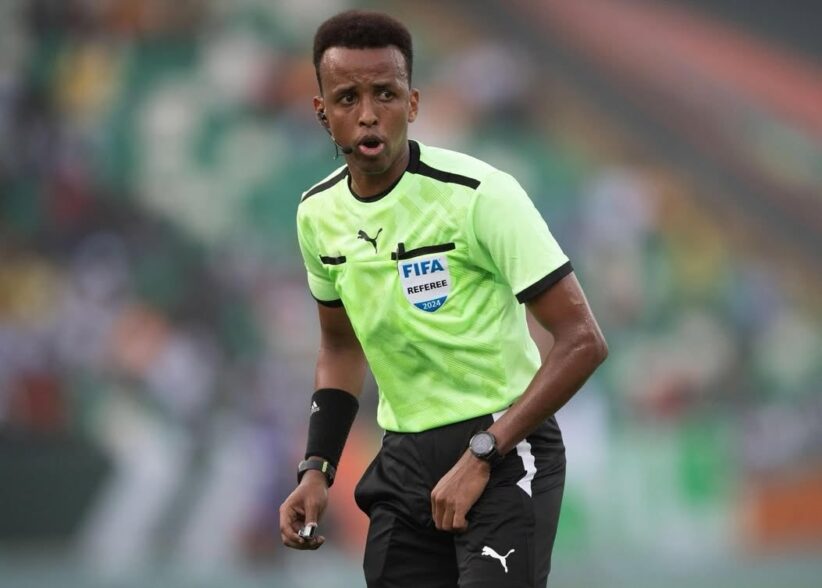
Somali international referee Omar Abdulkadir Artan’s ambition of officiating at the 2026 FIFA World Cup has effectively come to an end following confirmation that his immigration status will not be altered by the host authorities. The decision closes a historic opportunity that would have seen him become the first Somali official at football’s biggest tournament.
In an official clarification, FIFA stated that it has no jurisdiction over immigration or visa matters, emphasizing that such decisions are solely the responsibility of host countries. The governing body noted that it had been informed by the relevant authorities that Artan’s status would remain unchanged, making him ineligible for participation in the tournament.
“FIFA is not involved in host country immigration processes, including visa adjudications,” the organization stated, underlining the separation between sporting governance and national entry regulations.
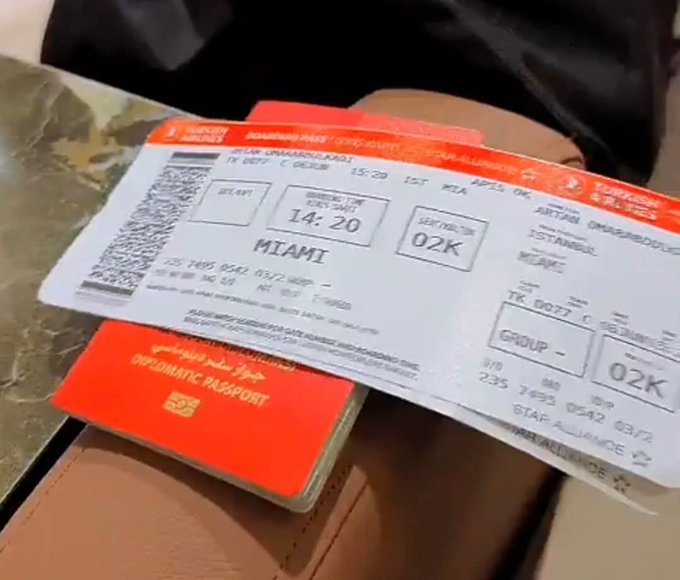
The 2026 World Cup, jointly hosted by the United States, Canada, and Mexico, is set to be the largest edition in history, featuring 48 teams and an expanded pool of match officials. Artan had been widely regarded as one of Africa’s promising referees, and his potential involvement had generated optimism within Somali and African football circles.
However, the latest development has ended those hopes, despite growing expectations that football authorities might intervene. FIFA’s position confirms that even at the highest level of the sport, administrative and immigration decisions remain beyond its control.
Adding to the response, the Ministry of Youth and Sports in Somalia expressed deep regret over the visa denial that blocked Artan’s participation. The Ministry reiterated its full support for his career, stating that Somalia stands firmly behind him and will continue to back his development on the international stage despite the setback.
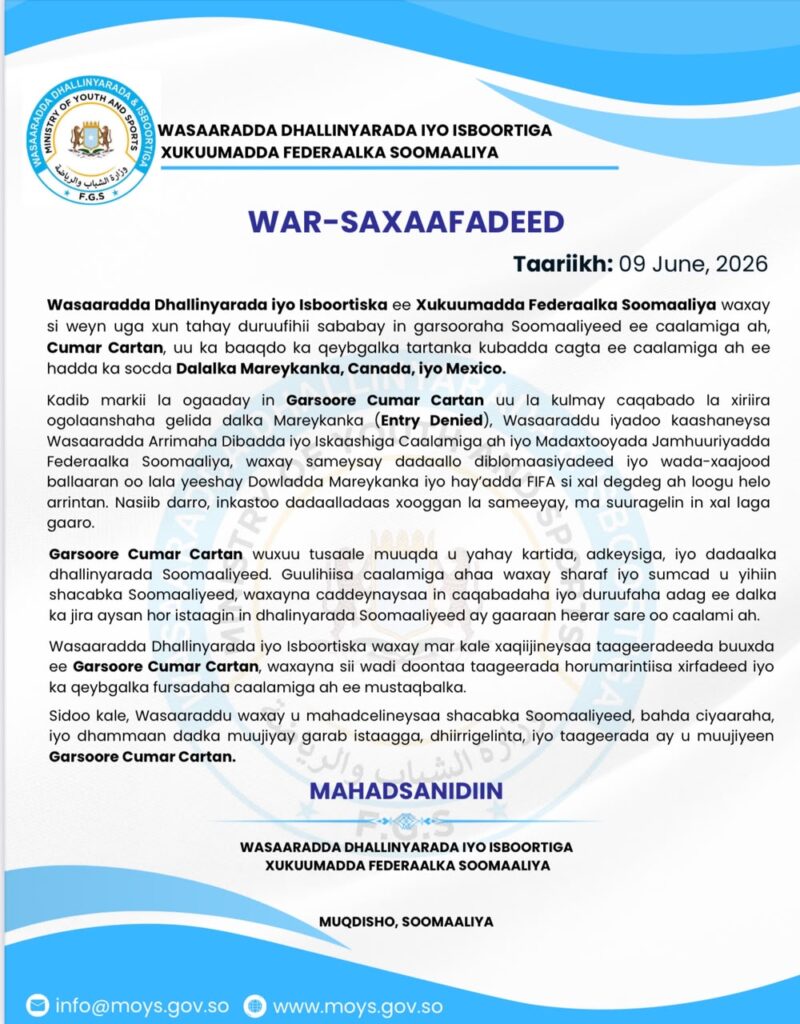
Artan’s situation has drawn widespread attention, not only because of its sporting implications but also due to the broader discussion it has sparked about the intersection of global sport and immigration policies. His case highlights how external regulatory frameworks can influence participation in international competitions, regardless of sporting merit.
With FIFA confirming its limited role and host authorities maintaining their decision, Artan’s dream of officiating at the 2026 World Cup has now been officially halted. Nonetheless, he remains an active figure in international refereeing, and stakeholders within Somali football continue to view him as an important ambassador for the country’s growing presence in global football officiating.