A fresh storm could be brewing in African football governance after documents emerged confirming the reservation of a new entity name, Great Africa Football Alliance, signaling a potential breakaway movement within the game’s leadership structures.
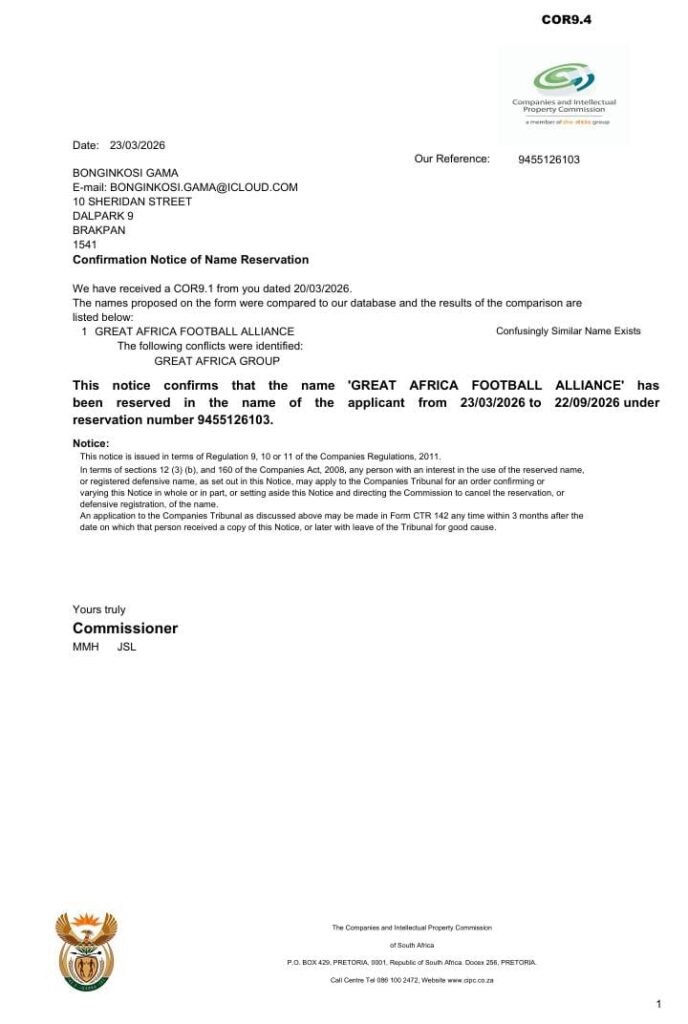
The document, issued by the Companies and Intellectual Property Commission (CIPC) and bearing official registration details from Pretoria, confirms that the name has been reserved from March 23, 2026, to September 22, 2026. The reservation, points to early but deliberate administrative steps toward establishing what could evolve into a new continental football body.
The South African registration adds an intriguing dimension to the unfolding developments, hinting at a possible Southern African foothold in what appears to be a broader push to challenge existing power structures within African football.
This comes at a time when a group of disgruntled football administrators, both former and current, across the continent are reportedly considering forming a new association. Their concerns center on what they describe as systemic bias and unfair treatment within the Confederation of African Football.
At the heart of their grievances is the perceived preferential treatment toward the Union of North African Football region, which hosts both CAF headquarters and the FIFA regional office. Critics argue that this concentration of influence has tilted decision-making in favor of North African interests, leaving other regions increasingly sidelined.
The frustrations are further fueled by controversial decisions surrounding the Africa Cup of Nations 2025 title involving Senegal, as well as growing dissatisfaction with the current structure of CAF’s inter-club competitions, particularly the CAF Champions League and Confederation Cup.
While it remains unclear how far the proposed Great Africa Football Alliance will progress beyond the name reservation stage, the emergence of formal documentation from South Africa underscores the seriousness of the initiative and highlights widening cracks within African football leadership. If pursued, it could mark a significant shift in the continent’s football governance landscape.