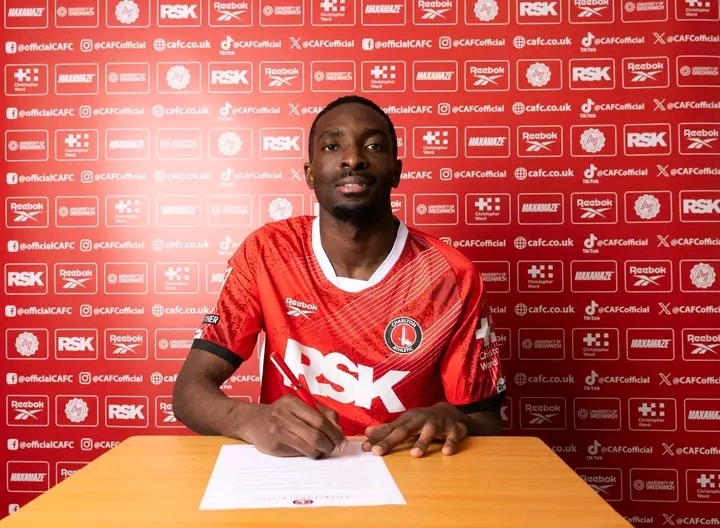
Collins Sichenje’s steady rise through European football reached a defining moment this week after English Championship side Charlton Athletic completed a £2 million move for the 22-year-old Kenyan international from Serbian club FK Vojvodina. The transfer, valued at approximately Ksh 355 million, was confirmed during the winter transfer window, with Charlton unveiling the defender last evening in official club imagery, signalling one of the biggest moves ever involving a Kenyan player.
Sichenje’s journey began back in 2019 when AFC Leopards signed the promising defender, offering him his first proper platform in top-flight football. His performances quickly drew attention beyond Kenya’s borders, and in 2022 Ingwe sanctioned his transfer to Swedish giants AIK in a deal worth about Ksh 5.4 million. The move came with a four-year contract and high expectations, but breaking into AIK’s senior side proved difficult.
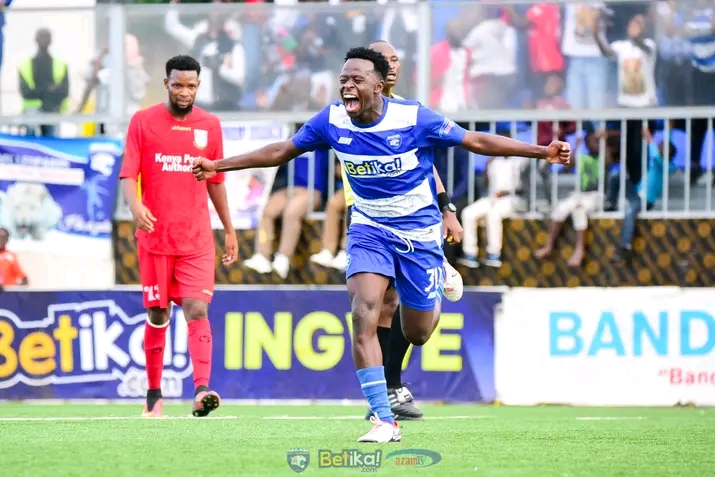
In search of regular football, Sichenje was sent out on loan twice. His first stop was Finnish club KuPS, where he gained valuable competitive experience, before another loan move took him to Serbia with FK Vojvodina. It was in Serbia that his career found momentum. Sichenje settled quickly, became a regular starter, and established himself as an integral part of Vojvodina’s defensive unit. His impact convinced the Serbian club to make the move permanent in 2024, officially ending his ties with AIK and cementing his status in one of Eastern Europe’s demanding leagues.
Those consistent performances have now earned him a high-profile move to England. Charlton Athletic’s decision to invest £2 million underlines the club’s belief in his development and potential, with the Championship widely regarded as one of the most competitive and physically demanding leagues in Europe. The transfer is officially a move from FK Vojvodina to Charlton Athletic, not from AFC Leopards, a distinction that has become central to the debate that followed the announcement.
Back home, Sichenje’s big-money switch has reignited discussion around whether Kenyan clubs involved in a player’s development benefit when such transfers occur. The answer lies within FIFA’s Regulations on the Status and Transfer of Players.
Under Article 20 of the FIFA Regulations on the Status and Transfer of Players (RSTP), the rules state:
“Training compensation shall be paid to a player’s training club(s) when a player signs his first professional contract and on each transfer of a professional until the end of the season of his 23rd birthday.”
Beyond training compensation, FIFA also provides for a solidarity mechanism designed to reward clubs that contributed to a player’s development. Article 21 of the RSTP provides that:
“If a professional is transferred before the expiry of his contract, five percent (5%) of any compensation, excluding training compensation paid to his former club, shall be deducted from the total amount of this compensation and distributed by the new club as a solidarity contribution to the club(s) involved in his training and education over the years.”
The method of distributing that five percent is further clarified in Annexe 5 of the RSTP, which states:
“The solidarity contribution shall be distributed to the training clubs in proportion to the number of years the player was registered with each club between the ages of 12 and 23.”
At 22 years old, as confirmed by Charlton Athletic, Sichenje remains within the eligibility window set out by FIFA. This means that although the transfer is from Vojvodina to Charlton, AFC Leopards as one of the clubs involved in his training during his formative years are entitled to a portion of the 5% solidarity contribution, calculated based on the time he spent at the club.
On the international stage, Sichenje’s profile continues to grow. He has earned eight caps for the Kenya national team and has already found the net once, further underlining his value as a modern defender comfortable at both club and international level.