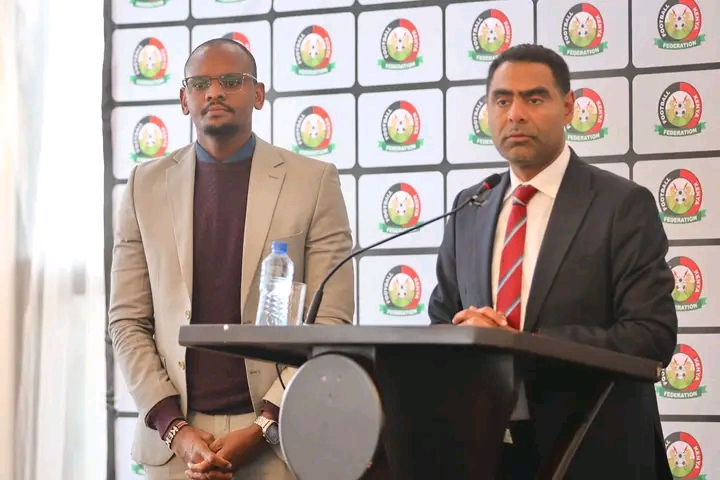
Football Kenya Federation President Hussein Mohammed faced an unusually large media gathering on Monday as he sought to explain the circumstances surrounding the delayed start of the 2026/27 SportPesa League and defend his administration amid an escalating governance and legal dispute.
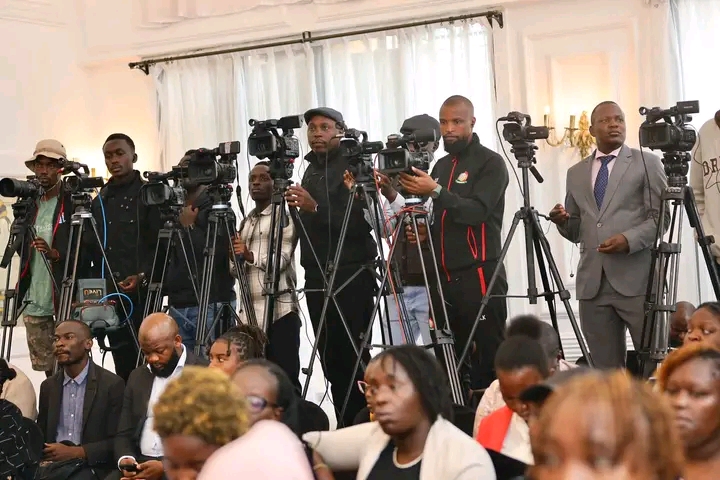
More than 130 journalists attended the press conference, reflecting the growing national attention around a crisis that has left clubs, players, sponsors and supporters uncertain about when the new league season will finally begin.
A visibly charged Mohammed defended his administration’s handling of the crisis and, during a tense question-and-answer session, took aim at some of his critics within the football administration. His comments came as the federation faces pressure over the repeated postponement of the league, disagreements within the National Executive Committee and conflicting court orders.
Mohammed blamed the impasse over the league kick-off on contradictory court orders, saying the federation had been placed in a difficult position by directions coming from different courts.
He appealed to the Judiciary, saying it should “not be used” in football disputes, while stressing the need for a solution that would allow the season to proceed without exposing clubs and other stakeholders to further legal and commercial uncertainty.
The FKF president also addressed his strained relationship with Vice President McDonald Mariga and seven other NEC members who have raised concerns over the federation’s governance and decision-making.
“The doors are always open… but at the same time we can’t be held hostage indefinitely on certain key issues,” Mohammed said, signalling his willingness to engage the dissenting NEC members while maintaining that disagreements should not indefinitely prevent the federation from making key decisions.
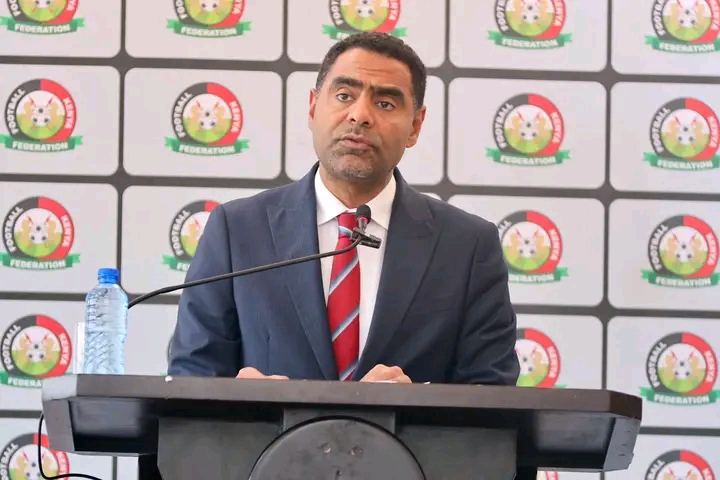
The president was particularly sharp when responding to a question about a club chairman who recently called for the dissolution of the FKF NEC during a national radio interview.
“Some of them have destroyed other sports. You have destroyed the Safari Rally, unakuja sasa kwa football kujaribu kutukoroga. Enda kwanza ujibu hizo mashtaka,” Mohammed said.
His remarks underscored the increasingly heated nature of the dispute, with the federation’s leadership facing criticism not only over the league impasse but also over broader governance questions.
The legal controversy centres on the applicable FKF rules, promotion and relegation and whether Kariobangi Sharks and Mombasa United should play a playoff before the new season begins. A Murang’a High Court order stopped the league from starting without the playoff, while a subsequent Kiambu court order directed FKF to include Mombasa United as the 18th team.
The competing orders have left FKF facing an administrative dilemma, with the federation postponing the league indefinitely as it seeks legal guidance on how to proceed.
The dispute has also revived questions about football’s established dispute-resolution mechanisms. FIFA’s statutes restrict recourse to ordinary courts in football disputes unless specifically permitted, while the FKF Constitution similarly provides for arbitration and recognised sporting dispute-resolution structures.
The continued movement between ordinary courts and specialised football mechanisms carries wider risks, including conflicting orders, administrative paralysis and uncertainty for clubs and commercial partners. More significantly, persistent failure to comply with FIFA’s dispute-resolution framework could expose FKF and other football stakeholders to scrutiny and potential disciplinary action.
For now, however, the immediate challenge remains finding a legally sustainable route to restart the league while addressing the growing governance tensions within FKF. Mohammed’s combative appearance offered little indication that the divisions surrounding the federation are close to disappearing, with the league still suspended and the legal standoff unresolved.