World football’s law-makers have taken a firm stand on discipline and conduct, approving a series of changes that could significantly reshape player behaviour on the pitch ahead of the FIFA World Cup 2026.
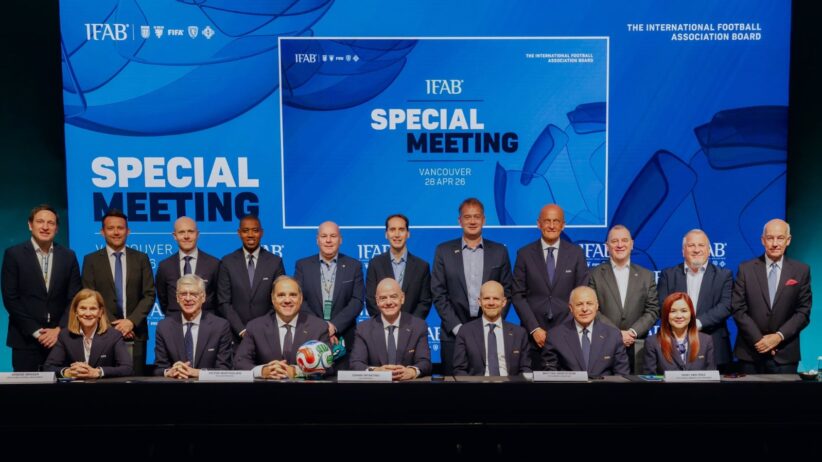
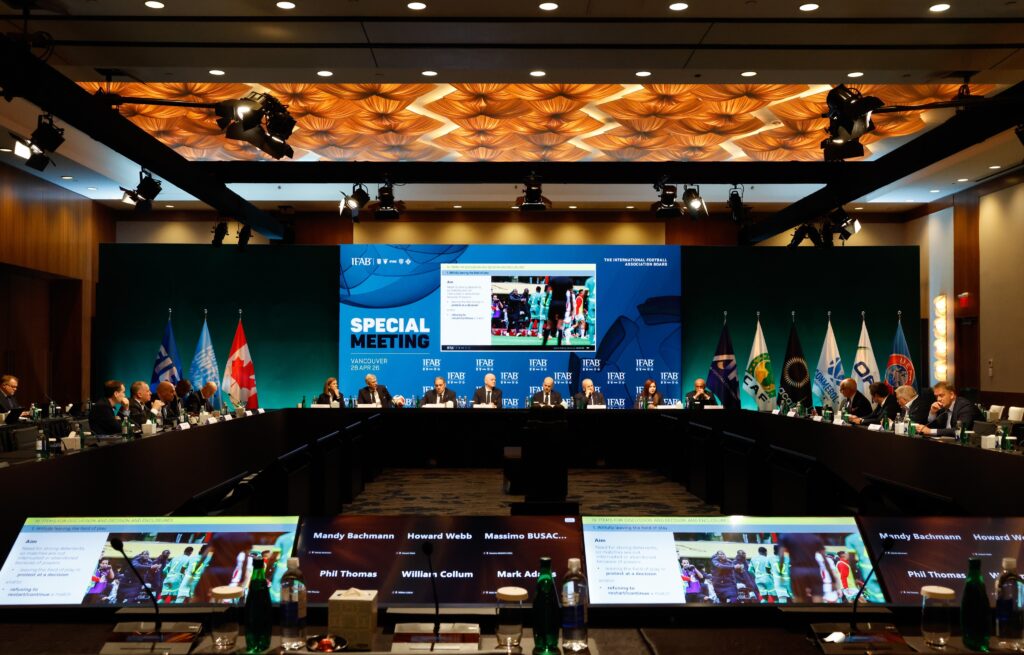
At a Special Meeting in Vancouver, Canada, the International Football Association Board (IFAB), in collaboration with FIFA, unanimously backed new amendments targeting discriminatory and inappropriate actions during matches. The decisions reflect a growing push within the game to promote respect, transparency, and accountability.
One of the most notable changes centres on players covering their mouths during confrontations. Under the new guidelines, competition organisers will have the discretion to impose a red card on any player who does so in heated exchanges. The move is aimed at curbing the use of abusive or discriminatory language that is often concealed from officials and cameras.
In another strong measure, IFAB has addressed acts of protest against referees. Players who leave the field of play in disagreement with a decision risk immediate dismissal, while team officials who encourage such behaviour will face similar punishment. Furthermore, any team whose actions lead to the abandonment of a match will, in principle, forfeit the fixture, a rule designed to deter organized protests and maintain match integrity.
Beyond discipline, the new amendments also focus on improving the flow and tempo of matches. Referees will now implement a visible five-second countdown for restarts such as throw-ins and goal kicks. Failure to restart play within that window could result in possession being handed to the opposition, or a corner awarded in the case of delayed goal kicks.
Substitution procedures have also been tightened. Players being replaced must exit the field within ten seconds of the signal. Delays will not go unpunished, as the incoming substitute may be forced to wait, temporarily reducing their team’s numbers.
Medical stoppages are another area under scrutiny. Players who receive treatment on the pitch will be required to remain off the field for at least one minute once play resumes, discouraging tactics aimed at slowing the game.
The Video Assistant Referee system has not been left out. VAR officials will now be permitted to intervene in specific situations, including clearly incorrect second yellow cards, cases of mistaken identity, and wrongly awarded corner kicks , provided the review does not disrupt the flow of the match.
Additional updates to the Laws of the Game, set to take effect from July 2026, include increased flexibility in international friendlies, where teams may use up to eight substitutions, or even eleven if both sides agree. There is also room for the use of body cameras by referees, depending on competition regulations, as well as clearer guidance on restarts, dropped balls, and penalty scenarios such as accidental double touches.
IFAB has also confirmed that trials on offside rules and semi-automated technology will continue, signalling that further refinements could still be on the horizon.