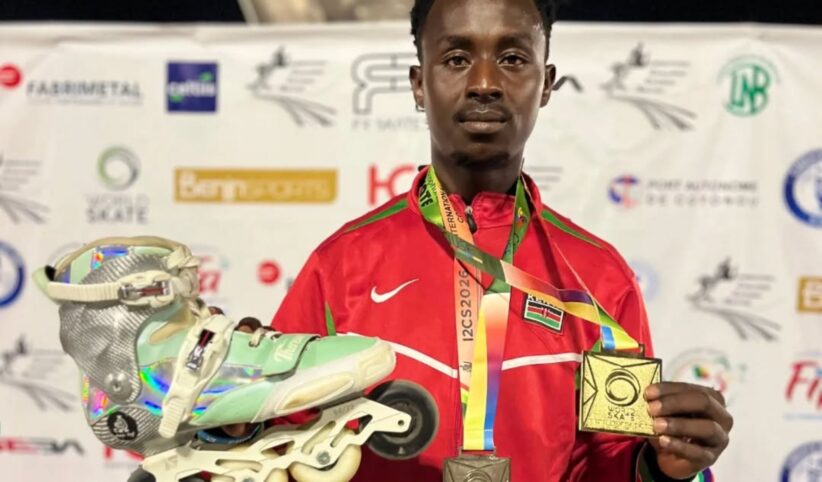
Kelvin Kiarie’s triumph in Cotonou should have been a moment of pure national pride, a story of a rising Kenyan athlete conquering the continental stage. Instead, it has reopened an uncomfortable conversation about neglect, mismanagement, and the growing burden placed on self-sponsored athletes in the country.
At the International Skating Championship in Benin, Kiarie delivered a standout performance, clinching gold in the Freestyle Battle and adding a silver medal in the Classic Slalom. Competing against some of the best talents in West Africa, he carried Kenya’s flag with distinction, reinforcing both his quality and the untapped potential within the country’s roller sports scene.

Yet behind the medals lies a troubling reality. Kiarie’s journey to Benin was entirely self-funded, a situation that continues to define the experiences of many Kenyan athletes across lesser-funded disciplines. This comes despite the government allocating Ksh.13.5 billion to the Sports, Arts and Social Development Fund for the 2025/26 financial year, a kitty meant to support federations and athletes in their international engagements.
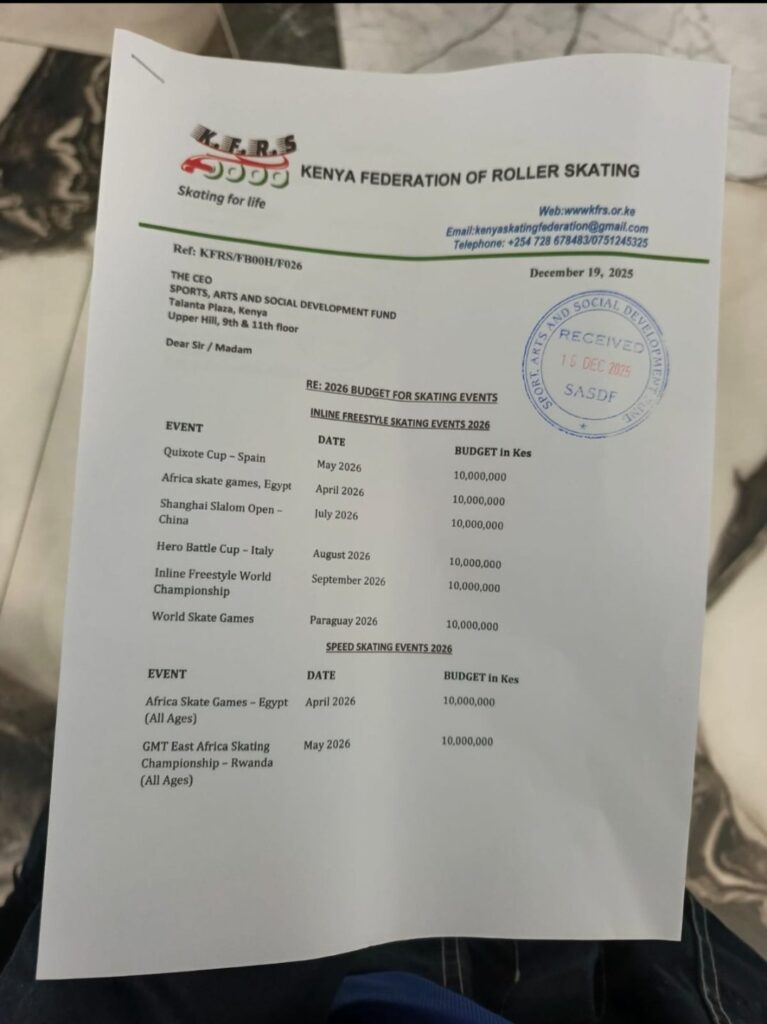
Documents from the Kenya Federation of Roller Skating show that the federation has consistently submitted budgets for international competitions. The 2026 calendar alone features events across Spain, Egypt, China, Italy, Paraguay and Rwanda, with each assignment estimated at around Ksh.10 million. On paper, the planning exists and funding requests are being made. In practice, however, athletes continue to struggle to access meaningful support.
The disconnect appears to lie in execution and governance. While allocations are made and proposals submitted, athletes like Kiarie are still left to shoulder the financial burden of representing the country. Bureaucracy, inefficiencies, and internal decision making gaps continue to widen the distance between funding frameworks and actual delivery on the ground.
Questions have also persisted around leadership within the sport’s administration. Attention has increasingly turned to Anthony Mburu, with critics raising concerns about governance standards, accountability, and compliance with provisions of the Sports Act. Some stakeholders argue that issues around term limits, which cap tenure at 8 years for office holders in sports federations, have not been adequately addressed, fueling further debate on leadership continuity and reform within the federation.
Meanwhile, Kelvin Kiarie stood alone on the podium in Cotonou as Kenya’s national anthem rang out, a powerful and emotional moment that captured both pride and isolation in equal measure. With no official delegation beside him, the sight of the flag rising while he represented the country solo underscored the wider struggles behind his success.