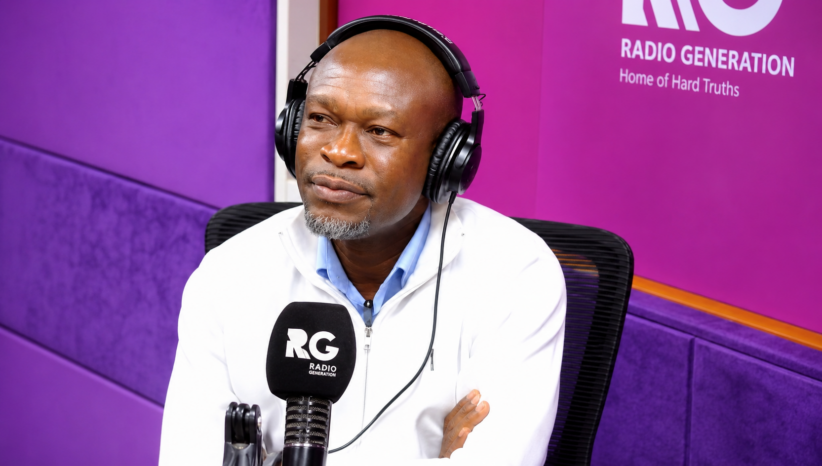
Charles “CK” Akonnor is not one to be intimidated by reputations, history or the weight of expectations. From breaking barriers in the Bundesliga to captaining Ghana and now leading Gor Mahia, the Ghanaian coach has built a career around resilience, discipline and the belief that difficult challenges can be overcome.
Speaking on Radio Generation , Akonnor opened up about the journey that has shaped his football philosophy, his experiences as a player and coach, Gor Mahia’s run to the CECAFA Kagame Cup final in Rwanda and his approach to the club’s upcoming continental challenge against Egyptian giants Pyramids FC.
For Akonnor, football has been a lifelong journey. He rose through Ghana’s youth national teams before captaining the U20 side and later leading the country at the 1996 Olympic Games in Atlanta. He went on to captain the senior national team, the Black Stars, and featured in four Africa Cup of Nations tournaments between 1994 and 2000.
His career took another significant turn when he moved to Germany at the age of 19. After playing for Fortuna Köln, he joined VfL Wolfsburg, where he made history as the first African player to captain a Bundesliga club.
That achievement came during a period when African players in European football faced significant racial barriers. Akonnor said discipline and performance were crucial in helping him overcome the challenges and establish himself in German football.
His playing career also produced remarkable moments of courage. In one European encounter for Wolfsburg against a Dutch opponent, he suffered a serious head injury but returned to the field with his head heavily bandaged. He later scored a late winning goal, a moment that remains etched in his memory.
Akonnor still keeps the blood-stained shirt from that match.
Another defining moment came at the 1993 FIFA U20 World Cup in Australia, where Ghana reached the final after defeating England in the semi-finals. Those experiences helped shape a mentality that would later become central to his coaching career—the understanding that talent alone is not enough and that footballers must learn how to deal with pressure, adversity and difficult circumstances.
His move into coaching was equally deliberate. Akonnor studied coaching in Germany, earning his B Licence and gaining additional knowledge in mental and psychological coaching before returning to Ghana.
“I studied coaching in Germany, before returning to Ghana to begin my coaching career,” he said.
He went on to manage some of Ghana’s biggest clubs, including Asante Kotoko, Hearts of Oak and Ashanti Gold, before taking charge of the Ghana senior national team.
Those experiences also shaped his approach to handling African footballers. Akonnor believes coaching cannot simply be about shouting instructions and demanding performance. A coach must first understand the person behind the player.
“I always say you cannot treat the African player the same way as you treat the European player. They are different people, they are from different backgrounds,” he said.
Akonnor explained that a player’s poor performance may sometimes have nothing to do with football. A player could arrive at training without having eaten since morning, yet a coach who knows nothing about his circumstances may respond by shouting at him.
“It won’t work unless you get into his brain to understand exactly what he’s going through,” he said.
That philosophy of empathy and adaptability is now being applied at Gor Mahia.
His first major test with the Kenyan champions came at the CECAFA Kagame Cup in Rwanda, a tournament Akonnor considered an invaluable preparation exercise ahead of the new season.
Rather than viewing the competition simply as a regional tournament, he described it as a “mini Champions League” that allowed Gor Mahia to test its tactical organisation, mentality and ability to cope with pressure against strong opposition.
The tournament provided plenty of adversity, including situations where Gor had to play with 10 men. Akonnor was particularly pleased with how his players responded, including during the semi-final against Sudanese giants Al-Hilal.
For him, those moments were as valuable as the results because they demonstrated the team’s ability to remain organised and mentally strong under pressure.
Gor Mahia eventually reached the final against Rwanda’s Rayon Sports, a run Akonnor believes surprised some observers.
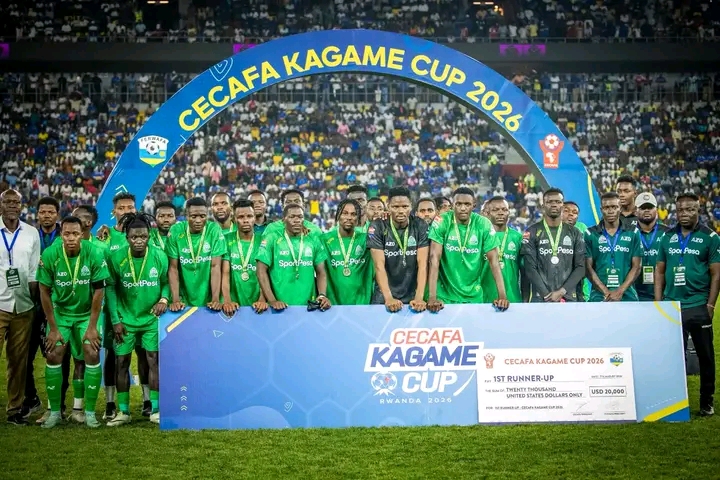
“When we went to Rwanda, I don’t think they expected us to get to the finals,” he said.
The final ended in heartbreak, however, as Rayon Sports secured a late 2–1 victory despite Gor Mahia controlling approximately 70 percent of the match.
Akonnor’s assessment was that Gor had done much of the hard work but failed to make their dominance count where it mattered most. The lack of sharpness in the final third ultimately proved decisive, offering the coach an important lesson about the fine margins that separate victory from defeat.
The Rwanda experience has also strengthened Akonnor’s appreciation of the Kenyan Premier League.
Having worked in Ghana, he says the intensity surrounding Gor Mahia is something he has found particularly striking. According to the coach, every opponent approaches a match against Gor with extraordinary determination.
“In Kenya, what I realize is that with Gor, every match is very tough. Be it a lower division or whatever, it’s tough,” he said.
Akonnor compared that environment with Ghana, where he believes some smaller clubs can face giants such as Asante Kotoko with the expectation that defeat is almost inevitable.
In Kenya, he has found a different mentality. Every team believes it can hurt Gor Mahia, making virtually every league fixture a high-pressure contest.
He also praised Kenyan coaches for their tactical development, saying the level of strategic thinking has contributed to a league that has become increasingly competitive and difficult to win.
That competitiveness will be important as Gor Mahia turns its attention to Pyramids FC.
The Egyptian side may enter the contest with the advantage on paper, possessing greater financial resources, squad depth and continental experience. But Akonnor insists those factors will not determine the outcome before the two teams step onto the pitch.
“No fears. We shouldn’t panic too much. Everything is possible,” he said.
For Akonnor, Gor Mahia’s run in Rwanda is already evidence that football does not always follow predictions.
“When you look on paper we don’t come close, but everything is possible, just like the CECAFA Kagame Cup,” he said.
Rather than allowing his players to become consumed by the stature of their opponents, Akonnor wants Gor to concentrate on their own strengths, correct their weaknesses and find a way to compete.
“For us, we are looking at the team itself—what we can do to improve, what we can do to qualify. It’s all about qualifying to the next level…and that’s where our focus is.”
He also believes the challenge requires collective responsibility. The players and technical team must be focused, but so must the club’s management and supporters.
“All of us have to be focused: the playing body, technical team, management, and the K’Ogalo family,” he said.
That message perhaps captures Akonnor’s entire football philosophy.