One year after his passing, Raila Amolo Odinga is remembered for his immense contribution to Kenya’s political landscape. Yet beyond politics, the former Prime Minister had another passion that brought him closer to ordinary Kenyans: football.
Raila, who died on October 15, 2025, aged 80 while receiving treatment in India, was a football enthusiast whose love for the game stretched from local pitches to the national team. For him, football was more than a sport; it was a source of identity, community, pride and connection.
His relationship with the game began long before he became one of Kenya’s most recognisable political figures. In his younger years, he played for Luo Union FC, while later, during his time as Lang’ata MP, he turned out for Bunge FC. Having experienced the game as a player, he carried that understanding into his public life.
During political rallies, Raila often turned football commentary into a dramatic political metaphor, using the language of the game to explain campaign strategies, teamwork and how his coalition would outplay and defeat its opponents. He would sometimes imagine assembling his own first eleven, describing how his team would approach the contest and positioning himself as the striker leading the attack. These moments revealed how deeply football was woven into his personality, allowing him to connect with crowds through a game they understood and loved.
At the heart of his club football allegiance was Gor Mahia FC, the local side he loved and adored and served as its longtime Patron. His connection with K’Ogalo went beyond attending matches and celebrating victories. He stood by the club through difficult moments, offering financial support whenever the need arose, particularly during the years before Gor Mahia secured shirt sponsorship.
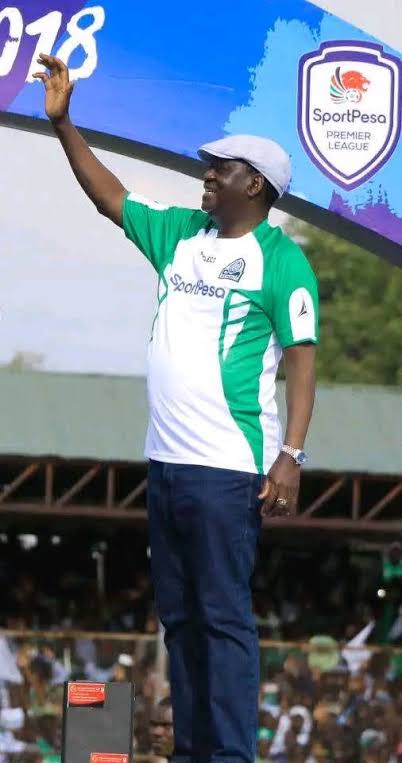
Even in his final months, Raila demonstrated his commitment to the club, donating Ksh. 10 million to help support its operations. His support reflected a lasting attachment to an institution that held a special place in his heart. To him, Gor Mahia was more than a football club; it was a source of pride for its supporters and a significant part of Kenya’s sporting culture.
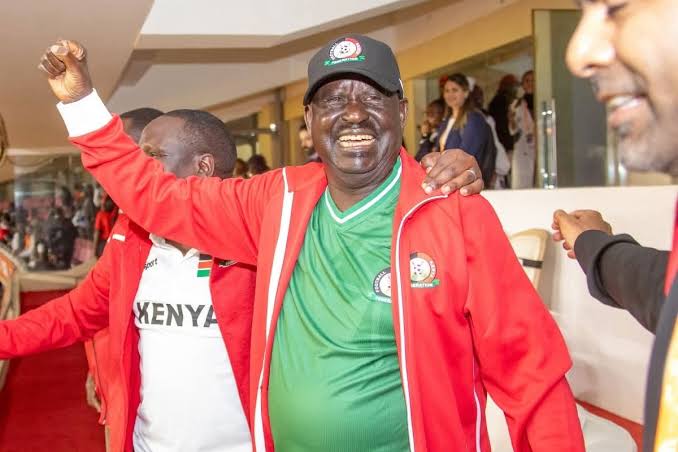
His passion, however, was not confined to club football. Raila was also a devoted supporter of Harambee Stars and rarely missed an opportunity to follow the national team. He often wore the national team’s replica jersey, showing his support as Kenya took on opponents on the international stage.
During Kenya’s 2024 African Nations Championship (CHAN) campaign, he pledged KSh 500,000 to each Harambee Stars player following their victory over Zambia, another demonstration of his willingness to recognise and reward the team’s efforts.
His contribution to football has also been reflected in the naming of sporting facilities. The stadium in Homa Bay bears his name, while the new Talanta Sports City complex in Nairobi has been earmarked to carry the Raila Odinga Stadium name ahead of the 2027 Africa Cup of Nations, which Kenya will co-host with Uganda and Tanzania.
His passing on October 15, 2025, prompted three days of national mourning, while domestic league matches were temporarily suspended. When Gor Mahia returned to league action, the club and its supporters paid tribute to their departed Patron. Players carried his portrait, wore shirts bearing his image and honoured him with a minute of silence. His familiar seat was marked with a black shirt bearing the number 80 and the word “Patron,” alongside his iconic cap.
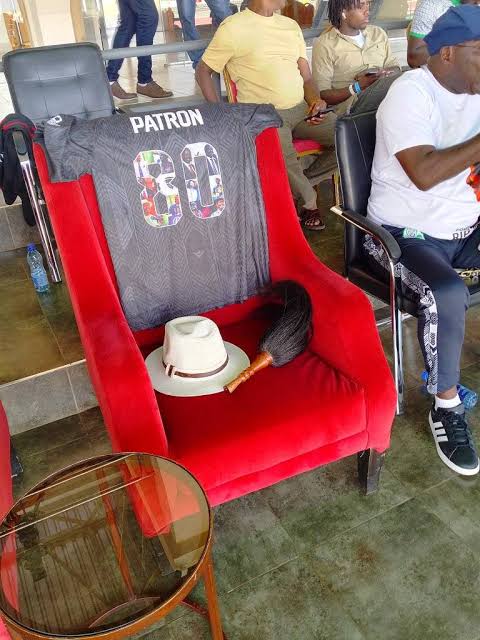
The tributes captured the deep bond between Raila and the club he had stood beside for years. For Gor Mahia supporters, they were remembering not only a national figure but also their Patron, a man who shared their passion for the green-and-white colours.
A year later, Raila’s presence remains unmistakable at Gor Mahia matches. His large banner with ‘Jowi’ continues to grace the stands, while the 80th minute has become a special moment for supporters to remember their late Patron. During the club’s most recent match, fireworks rattled the air as a beam of green smoke rose from the Ultras, creating a powerful tribute to a man whose bond with K’Ogalo went far beyond football.
K’Ogalo fans have also embraced jerseys bearing the inscription Patron ’80’. The number represents the age at which Raila died, and its appearance among supporters of different teams reflects the reach of his influence beyond Gor Mahia’s traditional following. Through these gestures, football fans continue to celebrate his memory in the stadiums where he found joy and belonging.
One year on, Raila Odinga’s football legacy remains part of his wider story. From playing for local sides to using football metaphors on political platforms, supporting Gor Mahia and cheering Harambee Stars, he embraced the game as a player, a fan and a patron. His love for football connected him to supporters across the country and left a lasting mark on Kenya’s sporting community.