

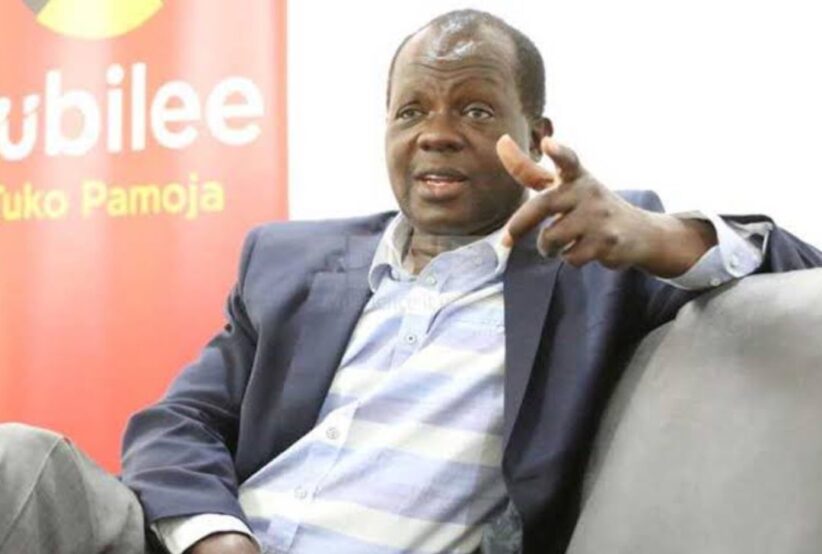
Former Jubilee Secretary General Raphael Tuju has said his decision to leave the party was purely personal and not driven by conflict.
Speaking on Monday, August 25, during an interview on NTV’s Fixing the Nation, Tuju explained that resigning from Jubilee allowed him the freedom to express his views without being seen as speaking on behalf of anyone.
“I left Jubilee so that I am free to air my opinions going forward without it being said I am talking on behalf of someone. It’s essentially stepping into a free space, and I can talk without worrying,” he said. “I have no hard feelings. I just quit the party to be free.”
Tuju emphasized that his resignation was a conscious and independent choice, adding that no one pushed him out.
“This is a personal decision, just like I made a personal decision to join Jubilee when the easier option, coming from Luo Nyanza, would have been to join ODM. From the ethnic aspect of politics, it would have been very easy for me to become MP for Rarieda or Siaya Governor. But I consciously chose Jubilee then, and I have consciously chosen to resign now. There are no hard feelings,” he said.
He stressed that leaving Jubilee means he can now speak only for himself without causing contradictions for the party.
“Now I can talk on behalf of myself, and the party cannot turn around and say, ‘How can you say that?’ So it’s essentially stepping aside, stepping into a free space where I can talk to you now without worrying about what Jubilee or Azimio will say,” Tuju added.
In a lengthy resignation letter addressed to party leader and former President Uhuru Kenyatta last week, Tuju outlined his reasons for quitting, reiterating that it was a personal decision.
He also clarified that he is not seeking any political seat at the moment. Instead, Tuju argued that Kenya’s challenges extend beyond individual officeholders.
“The problem in Kenya is that everything is seen in terms of political positions, yet the country’s problems are multiple and mostly structural. The resources available to counties are hardly enough for development, with most going to recurrent expenditure. Sometimes it has nothing to do with the individual occupying the office,” he said.


